
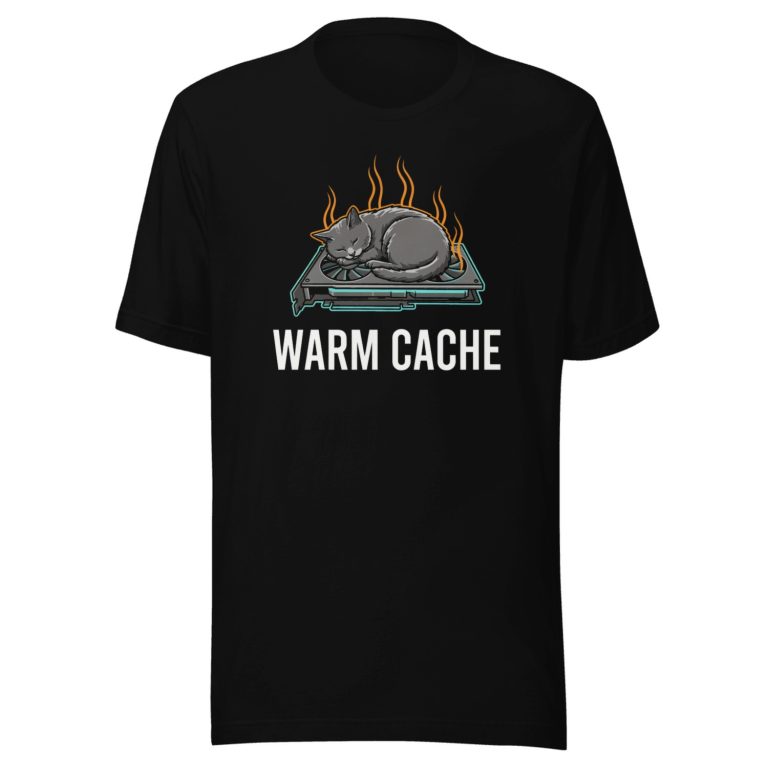
Start a long render on a home computer, go and cook dinner, and come back to find the cat asleep on top of the machine. Engineers have a phrase for a system that has been running for a while and is now quick: the cache is warm. The cat has taken this at face value.
A cache is a small, fast store that keeps copies of data that was used recently or often, so the next request for it does not have to go all the way to the slow storage where the data really lives. Think of the handful of things on your desk compared with the filing cabinet down the corridor. Nobody decided what lives on the desk. It filled itself with whatever got used most.
Hits, misses and the cold start
Caches are everywhere. Processors have several layers of them, tiny and very fast. Your browser keeps a cache of pages and images, which is why a site loads faster the second time. Large websites keep copies of their pages on servers near their visitors.
When the data you ask for is already in the cache, that is a hit, and it comes back quickly. When it is not, that is a miss: the system fetches it from slow storage, hands it over, and keeps a copy for next time.
A cache that has just been emptied, say after a restart or a new deployment, is cold. Every request is a miss, so everything is slow for a while. As requests come in, the cache fills with the things people actually ask for, and it warms up. A warm cache is one that is already full of the right things and answering quickly.
Engineers say this out loud, in meetings, with straight faces. Some even warm a cache on purpose, sending the common requests themselves after a restart so the first real visitors do not get the slow version.
AI services have their own version. Many keep the processed start of a long prompt for a few minutes, so a follow-up request that begins with the same text comes back faster and costs less. Leave it alone too long and that cache goes cold too.
Where the cat comes in
In a cache, “warm” is a metaphor. In a graphics card, it is not. A card doing hours of rendering or training gets genuinely hot, and the outside of a desktop case often gets pleasantly warm. Cats like it warmer than people do. They find the warmest object in the house with real precision, and they do not care what it is for.
So the engineer says the cache is warm, and the cat agrees, from on top of the hardware. The shirt is the opening scene of this page, drawn. (Do lift the cat off if it is covering the fans. Hardware likes cool air.)
Wear it
Warm Cache Cat is a grey cat asleep on a dual-fan graphics card, heat coming off it in orange waves. The tee is €26, and the same design comes as a mug at €16, a hoodie and a sticker. For something with more of a story, Cold Case Warm Cache splits a round badge between a robot detective working an old case in the rain and a cat asleep on humming servers.
Elsewhere: gifts for cat lovers who code, the Cats and AI humour collection, and what a context window is.